
What Makes Clay Soil Difficult
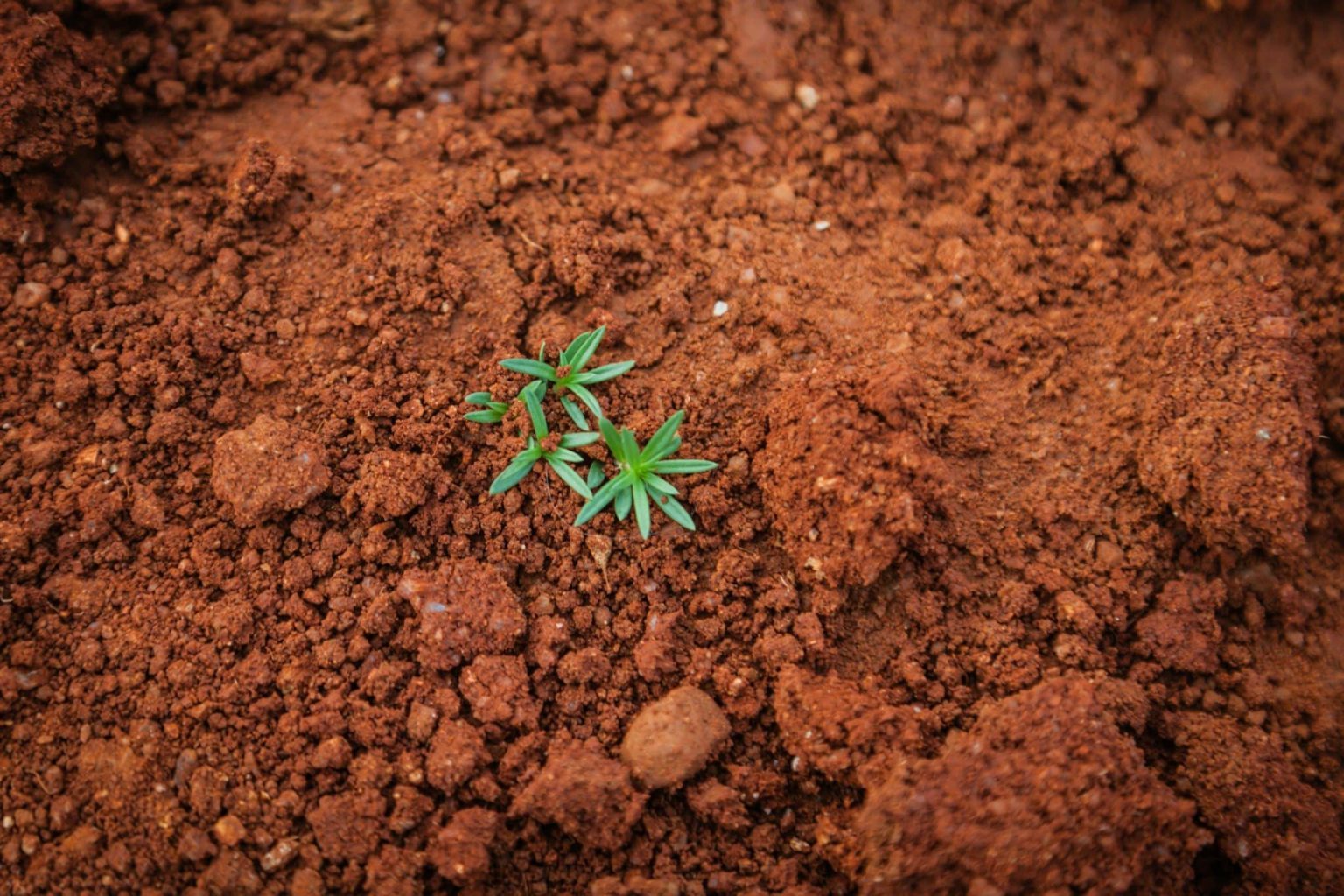
Clay soil is made up of extremely fine mineral particles, far smaller than sand or silt. These tiny particles pack together tightly, leaving very little pore space for air and water to move through. The result is a soil that drains slowly, warms up late in spring, and compacts easily under foot traffic or heavy equipment.
When clay dries out, it shrinks and hardens into something resembling concrete. When it gets wet, it becomes slippery, sticky, and nearly impossible to work. Digging in wet clay damages soil structure further, smearing particles together and creating dense clods that take months to break apart.
These characteristics make clay soil frustrating for homeowners and gardeners. Lawns struggle with standing water after rain. Garden plants suffer from root rot in saturated conditions or fail to push roots through compacted layers. But clay soil is not a lost cause. Understanding what you are working with is the first step toward improving it.
The Upside of Clay Soil
Before you write off your clay soil entirely, consider its genuine advantages. Clay has an exceptionally high cation exchange capacity (CEC), which means it holds onto nutrients like calcium, magnesium, and potassium far better than sandy soils. Where sandy soil lets fertilizer wash straight through with irrigation water, clay soil retains those nutrients in the root zone where plants can access them.
Clay also holds moisture effectively. During drought conditions, clay soil retains water longer than lighter soil types, giving plants a buffer that sandy soils simply cannot provide. The dense structure also offers stable root anchorage, which is why large trees often thrive in clay.
Clay is not bad soil. It is soil with specific management needs. The goal is not to eliminate clay but to improve its structure so water drains at a reasonable rate, roots can penetrate easily, and air reaches the organisms that keep soil healthy. With consistent effort, clay soil can become some of the most productive ground in your landscape.
Testing Your Clay Soil First
Before adding amendments, you need to understand exactly what you are working with. Not all clay soils are the same, and the right approach depends on your specific conditions.
The Jar Test for Texture
Fill a quart jar about one-third full with soil from your yard, then fill it the rest of the way with water. Add a tablespoon of dish soap, seal the lid, and shake vigorously for two minutes. Then set it down and leave it undisturbed for 24 to 48 hours.
Sand settles to the bottom within the first minute or two. Silt settles on top of the sand over the next few hours. Clay remains suspended longest and eventually forms the top layer. Measure the proportions to understand your soil texture. If the clay layer makes up more than 40% of the total, you are dealing with heavy clay.
pH Testing
Clay soils tend toward alkaline (pH above 7.0) in the western United States and toward acidic (pH below 7.0) in the eastern states with higher rainfall. Knowing your pH determines which amendments are appropriate and which plants will thrive without constant correction.
Simple home pH test kits are available at garden centers, or you can send a sample to your local cooperative extension office for more precise results.
Complete Soil Test
A lab soil test reveals nutrient levels, organic matter percentage, and sometimes CEC. Organic matter percentage is particularly important because it tells you your starting point. Most clay soils contain between 1% and 3% organic matter. Getting that number above 5% transforms how clay behaves. A soil test gives you a baseline to measure progress against.
Amendments That Work
Compost
Compost is the single best amendment for clay soil, and it is not close. Spread 2 to 3 inches of finished compost over the soil surface and work it into the top 6 to 8 inches. Do this annually and you will see measurable improvement in drainage, workability, and plant performance within a few seasons.
Compost improves clay in multiple ways simultaneously. It physically separates clay particles, creating larger pore spaces for air and water. It feeds soil microorganisms, particularly fungi, that produce glomalin and other compounds that bind soil particles into stable aggregates. These aggregates are the key to good soil structure. Compost also improves water-holding capacity in the pore spaces between aggregates while allowing excess water to drain.
Use whatever compost is available locally. Municipal compost, homemade compost, mushroom compost, or commercially bagged compost all work. The important thing is volume and consistency. One application will not fix clay soil. Annual applications compound over time.
Aged Manure
Composted animal manure functions similarly to plant-based compost with the added benefit of higher nitrogen content. Horse, cow, chicken, and sheep manure all work, but the manure must be aged or composted for at least six months before application. Fresh manure can burn plants, introduce weed seeds, and create odor problems.
Apply aged manure at similar rates to compost, 2 to 3 inches worked into the top layer. Be aware that manure can be higher in salts than plant-based compost, so alternate between the two rather than relying exclusively on manure.
Leaf Mold
Leaf mold is simply leaves that have decomposed over one to two years. It is an excellent clay soil amendment because it dramatically improves soil structure without adding excess nitrogen. The fungal-dominated decomposition process creates a material that is particularly effective at loosening heavy soil.
Leaf mold is free if you have deciduous trees. Rake leaves into a pile or wire bin each fall, keep them moist, and use the resulting crumbly material the following year or the year after. It is worth the wait.
Gypsum
Gypsum (calcium sulfate) is often recommended as a clay soil miracle cure, but the reality is more nuanced. Gypsum works specifically on sodic clay soils, meaning clay soils that are high in sodium. The calcium in gypsum displaces sodium on clay particles, which allows the particles to flocculate (clump together) and improves structure.
If your soil is not high in sodium, gypsum will not do much. A soil test that includes sodium levels and a Sodium Adsorption Ratio (SAR) will tell you whether gypsum is appropriate for your situation. In much of the western United States where irrigation water contains sodium, gypsum can be genuinely helpful. In areas with adequate rainfall that naturally leaches sodium, it is often unnecessary.
Cover Crops
Cover crops improve clay soil from below. Deep-rooted species like daikon radish, crimson clover, and annual ryegrass push through compacted layers, creating channels that persist even after the roots decompose. When you till the cover crop biomass back into the soil, it adds organic matter directly where you need it.
Plant cover crops during the off-season in garden beds or in areas you are preparing for future planting. A fall-planted cover crop of winter rye, for example, grows all winter, holds soil in place, and can be tilled under in spring several weeks before planting.
Mulch
Surface mulch improves clay soil gradually from the top down. Apply 3 to 4 inches of organic mulch (wood chips, shredded bark, straw, or leaf litter) and let it break down naturally. Earthworms and other soil organisms pull decomposing material into the soil, slowly building organic matter in the upper layers.
Mulch also prevents clay soil from crusting over and sealing, which happens when rain hits bare clay surfaces. That crust prevents water infiltration and forces runoff. A mulch layer absorbs raindrop impact and lets water percolate into the soil beneath.
What NOT to Add to Clay Soil
Sand
Adding sand to clay soil is one of the most persistent myths in gardening. The logic seems sound: clay is too dense, sand is loose, so mixing them should create something in between. In practice, adding sand to clay often makes things worse.
The tiny clay particles fill the spaces between sand grains, creating a material that behaves more like a poorly mixed concrete than loamy soil. To actually change clay texture with sand, you would need to add enough sand to make it the dominant fraction of your soil. For a typical garden bed, that means hauling in many tons of sand and mixing it uniformly to a depth of 12 inches or more. It is impractical and expensive. Compost achieves better results with less effort.
Peat Moss
Peat moss is sometimes recommended for clay soil, but it is a poor choice for several reasons. It is expensive in the volumes needed to amend clay. It acidifies soil, which may or may not be appropriate depending on your pH. It is slow to re-wet once it dries out. And it is harvested from peat bogs that took thousands of years to form, making it a non-renewable resource in any practical sense. Compost does everything peat moss does for clay soil, better and more sustainably.
Too Much of Anything at Once
Resist the temptation to dump massive quantities of amendments all at once in hopes of a quick fix. Adding 8 or 10 inches of compost in a single application can create a layering problem where the amended zone sits on top of unchanged clay like a perched water table. Water moves freely through the amended layer but stops at the interface with the dense clay beneath, creating soggy conditions in the root zone.
Gradual improvement over multiple seasons is more effective and more sustainable. Each annual application of 2 to 3 inches builds on the previous year’s work, and soil biology has time to integrate the organic matter throughout the profile.
Improving Clay Soil for Lawns
Lawns present a unique challenge with clay soil because you cannot till or dig without destroying the grass. All improvement has to happen from the surface or through targeted techniques.
Core Aeration
Core aeration is the single most important maintenance practice for lawns on clay soil. A core aerator pulls plugs of soil out of the ground, creating channels for water, air, and roots to penetrate. Aerate at least once per year, ideally in fall for cool-season grasses or late spring for warm-season grasses. Heavily compacted clay lawns benefit from twice-yearly aeration.
Leave the plugs on the surface to break down naturally. They decompose within a few weeks and return organic matter to the lawn surface.
Topdressing with Compost
After aeration, spread a thin layer (1/4 to 1/2 inch) of fine compost over the lawn. Drag it into the aeration holes with the back of a rake or a drag mat. This places organic matter directly into the soil profile where it can begin improving structure around grass roots. Repeat this annually and you will notice progressively better drainage and root depth.
Fertigation for Clay Soil Lawns
Granular fertilizer sits on the surface of clay soil and often washes away before it can dissolve and penetrate. The tight particle structure of clay resists infiltration, so much of your granular application may end up in storm drains rather than root zones.
Fertigation, the practice of delivering dissolved nutrients through your irrigation system, solves this problem. Liquid nutrients in solution move with water into the soil profile rather than sitting on top of it. Every time your irrigation runs, nutrients are carried directly to root depth.
An EZ-FLO injection system connects to your irrigation line and automatically mixes concentrated nutrients into your irrigation water at a consistent ratio. Products like Maxx Complete or Ferti-Maxx deliver a balanced nutrient profile in every watering cycle, keeping clay soil consistently nourished without the need to work granular fertilizer into resistant ground.
This approach is particularly effective on clay because small, frequent nutrient doses are more efficient than large periodic applications. Clay’s high CEC means it will hold onto dissolved nutrients effectively once they reach the root zone. The challenge has always been getting nutrients past the surface, and fertigation handles that.
Surfactants for Water Penetration
Clay soil often develops a hydrophobic surface layer, especially during dry periods. Water beads up and runs off rather than soaking in. Hydro-Maxx surfactant, applied through an EZ-FLO system, reduces water’s surface tension so it penetrates clay’s tight surface more readily. Better water penetration means better nutrient delivery, less runoff, and more uniform moisture throughout the root zone.
Humic Acid for Soil Structure
Ferti-Maxx Complexing Carbon delivers humic acid through your irrigation system. Humic acid promotes soil aggregation, the process by which individual clay particles bind together into larger crumbs with pore space between them. Over time, consistent humic acid application improves clay soil structure from within, complementing the physical improvements from aeration and compost topdressing.
Improving Clay Soil for Gardens
Raised Beds as an Alternative
If your clay soil is severe and your patience is limited, raised beds let you skip the clay battle entirely. Build frames 8 to 12 inches high and fill them with a quality garden soil mix. Your plants grow in ideal conditions from day one while the clay beneath gradually improves under the weight of better soil and active biology above it.
Raised beds also eliminate compaction from foot traffic since you never step on the growing area. For vegetable gardens on heavy clay, raised beds are often the most practical solution.
Double Digging with Compost
For in-ground gardens where you want to improve the native clay, double digging is labor-intensive but effective. Remove the top 12 inches of soil and set it aside. Loosen the next 12 inches with a fork, mixing in compost as you go. Then return the top layer, also mixed with compost. This creates a 24-inch zone of improved soil that roots can explore freely.
Double digging only needs to happen once. After the initial effort, maintain the beds with annual surface applications of compost and mulch. Never walk on dug beds, as foot traffic re-compacts clay quickly.
Permanent Mulch Pathways
Designate clear paths between garden beds and keep them permanently mulched with wood chips. This prevents foot traffic from compacting growing areas and adds organic matter to path soil over time. Eventually, you can rotate path and bed locations, planting into the path soil that has been improving under mulch while resting the former beds.
Timeline for Improvement
Be realistic about how long clay soil improvement takes. This is not a weekend project with instant results.
First season: You will notice that amended areas are easier to dig and that water infiltrates somewhat faster. Plants may show improved growth in areas where you worked in compost. These are incremental gains, not dramatic transformations.
Year two: With a second round of amendments, soil structure begins to change meaningfully. You will see more earthworm activity, better root development, and noticeably improved drainage. The soil will feel different in your hands, less sticky and more crumbly.
Years three and beyond: Consistent annual amendment produces genuinely transformed soil. Organic matter percentages climb, aggregate stability improves, and the biological community in your soil becomes self-sustaining. At this point, maintenance becomes easier because the soil system is working with you rather than against you.
The key word is consistent. One big effort followed by neglect will not produce lasting results. Annual compost applications, regular aeration for lawns, ongoing mulch replenishment, and continuous fertigation through an EZ-FLO system all contribute to steady, compounding improvement over time.
Maintaining Improved Clay Soil
Once you have invested the time and effort to improve your clay soil, protect that investment with a few ongoing practices.
Never work wet clay. If soil sticks to your shovel or forms a ribbon when squeezed, it is too wet to dig or till. Working wet clay destroys aggregate structure and sets your progress back significantly. Wait until the soil is moist but crumbles when handled.
Keep adding organic matter annually. Soil organisms constantly consume organic matter, so levels decline without replenishment. A 2 to 3 inch layer of compost each year in garden beds, or annual topdressing after aeration for lawns, maintains the gains you have made.
Keep traffic off growing areas. Use designated paths, stepping stones, or boards to distribute weight when you must access beds. Every footstep on clay soil compresses particles back together.
Mulch year-round. Bare clay surfaces crust, crack, and lose moisture rapidly. A permanent mulch layer moderates temperature, maintains moisture, prevents crusting, and feeds soil biology continuously.
Continue fertigation. Maintaining consistent, low-dose nutrition through an EZ-FLO system keeps soil biology active and well-fed. Healthy microbial populations are your best long-term defense against clay reverting to its compacted state, because those organisms are constantly producing the glues that hold soil aggregates together.
Clay soil improvement is not a one-time fix. It is an ongoing relationship with your soil. But the rewards, productive gardens, healthy lawns, and landscapes that thrive rather than struggle, make the sustained effort worthwhile.